We independently research every product we recommend. When you buy through our links, we may earn a commission. Learn more ›
Snow Removal & Winter Prep: What Your Compact Tractor Needs Before the First Snow
 Save
SaveThe first snowstorm doesn't check your calendar. Every year, the same thing happens: October feels early, nobody wants to think about it, and then one wet November morning the driveway is buried, the snow gear is still in a crate — and everything you need is on backorder. The people who sleep easy in winter are the ones who installed their snow setup in October, when they had daylight and dry ground to work with.
This guide covers the three decisions that matter: snow blower or snow blade, which driveway attachments to install before the ground freezes, and what to grab if you don't have a tractor at all.
1. Snow blower vs snow blade: the choice that matters most
This is the fork in the road, and the wrong pick makes every storm worse.
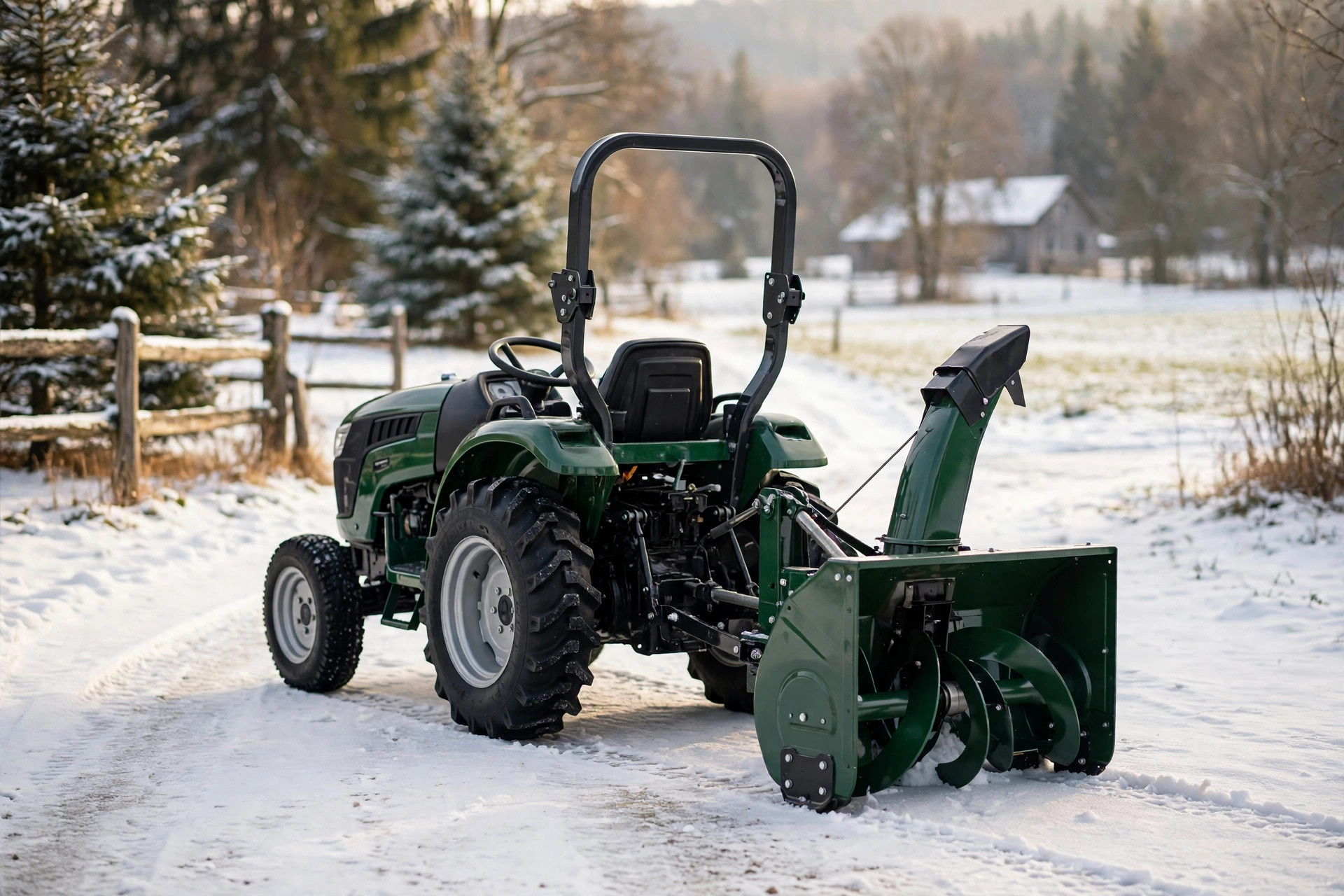
A 3-point snow blower runs off your tractor's rear PTO and throws snow — actually moves it off the driveway instead of shoving it aside. It's the right answer for deep snow, long driveways, and places that get multiple storms a month. No snow banks creeping inward all winter, no running out of room in February. The tradeoffs: it's heavier, needs enough PTO horsepower (check your tractor's rating before you buy anything), and it's slower going than a blade.
A front snow blade is the fast, simple option. Bolt it on, angle it, push. For light-to-moderate snow on a shorter driveway, it's genuinely the quicker tool, and it costs less. But blades have a hard limit: wet, heavy snow and deep drifts stop them cold, and every pass builds the banks a little higher. If your region gets the big wet storms, a blade alone will let you down exactly when it matters.
The rule of thumb I give neighbors: long driveway or heavy snow region, get the blower. Short driveway with mostly light powder, the blade is fine. And if your budget allows it, plenty of people run both — blade for the quick dustings, blower for the real storms.
One non-negotiable either way: match the implement to your tractor. A blower that wants more PTO horsepower than your tractor makes is an expensive mistake. Check the spec plate, not the sales page.
 Save
Save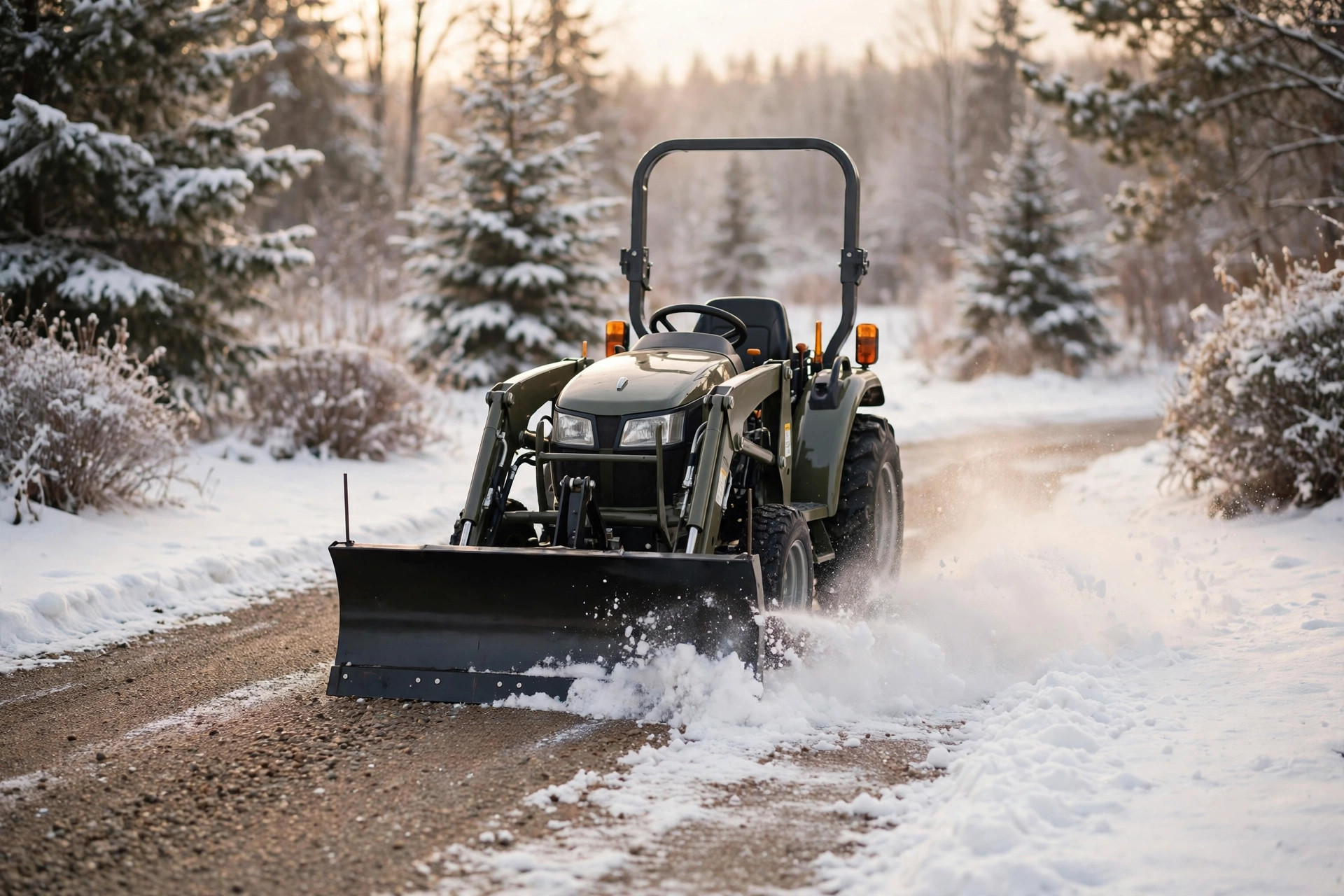 Save
Save2. Prep the driveway before the ground freezes
Snow removal goes badly on a bad driveway. Ruts, washouts, and a missing crown turn into ice ponds and frozen potholes by January — and you can't fix them once the ground is frozen. October is the month for this, while the ground is still workable.
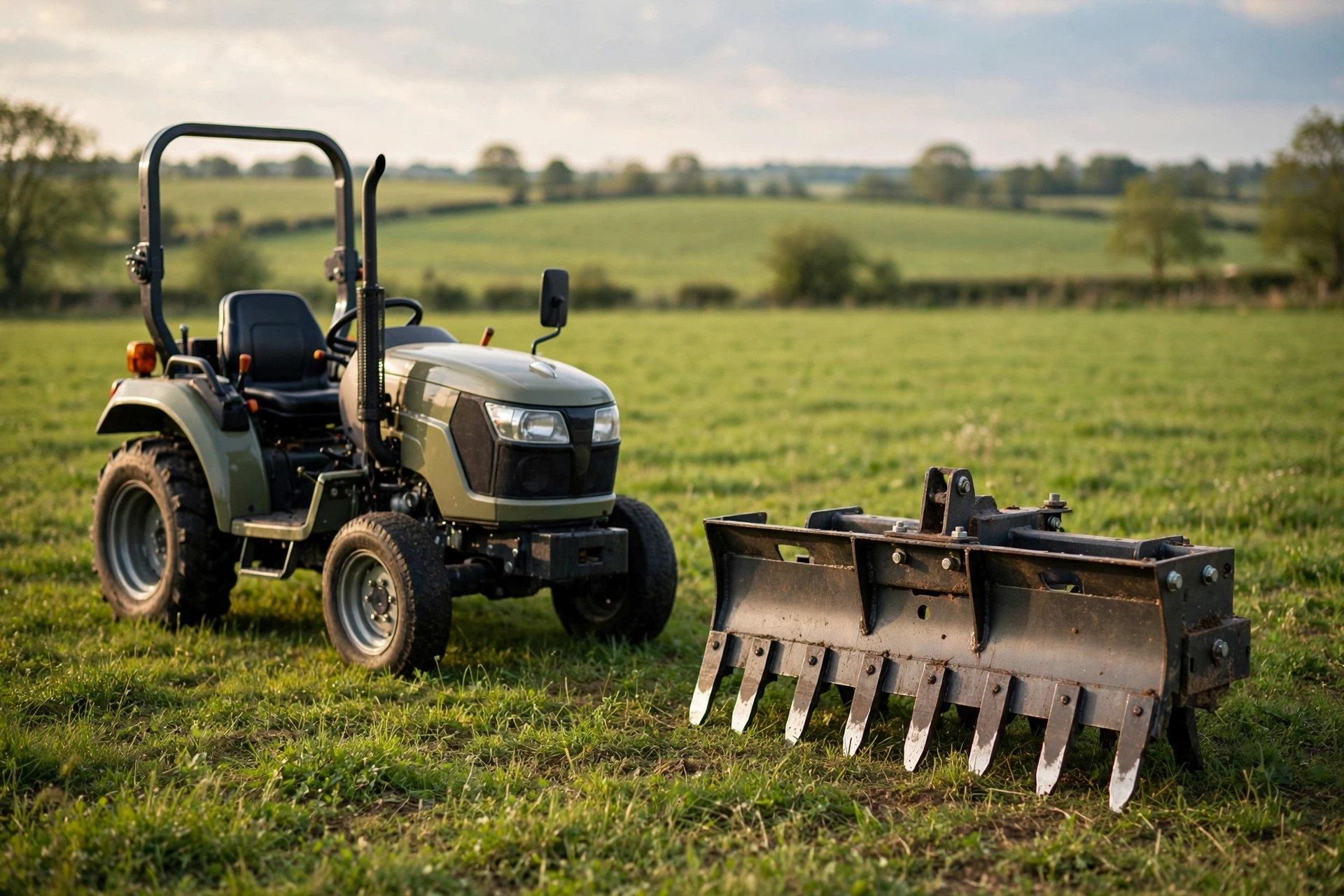
A box blade with scarifier shanks is the workhorse here. Drop the shanks to rip up packed gravel, then back-drag with the blade to re-crown the surface and fill the potholes. One afternoon of work in October saves you a winter of fighting washboard ruts under the snow.
Follow it with a chain drag harrow for the finishing pass — it knocks down the ridges and leaves the surface smooth, which is exactly what you want before the first plow pass scrapes across it.
If the driveway is mostly sound and just needs touch-ups around the edges, a plain 5-foot box blade handles the light maintenance without a full re-grade.
 Save
Save Save
Save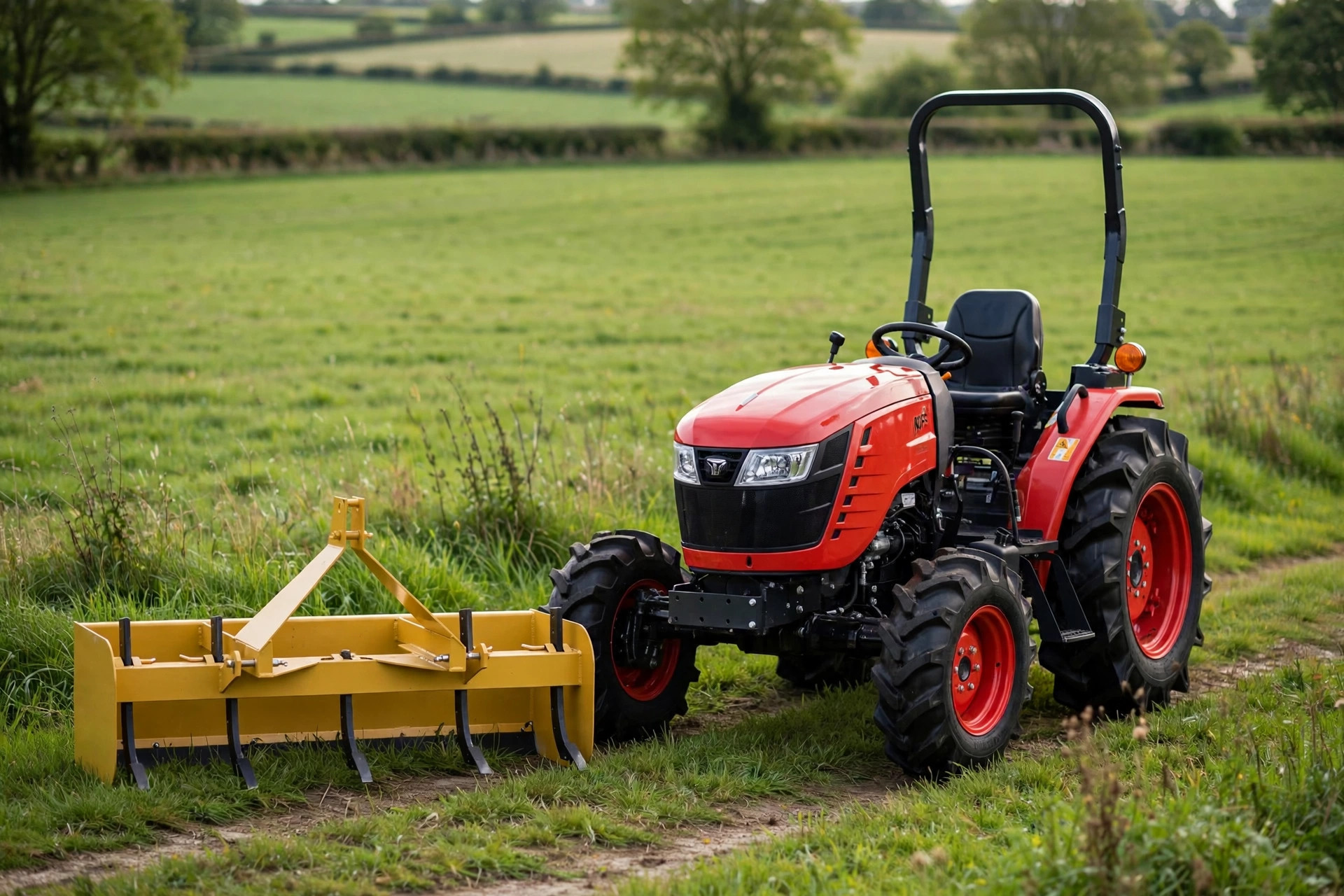 Save
Save3. The thing everyone forgets: ice management
Clearing snow is only half the job. The freeze-thaw cycles of November and March turn driveways into skating rinks, and shoveling can't fix ice.
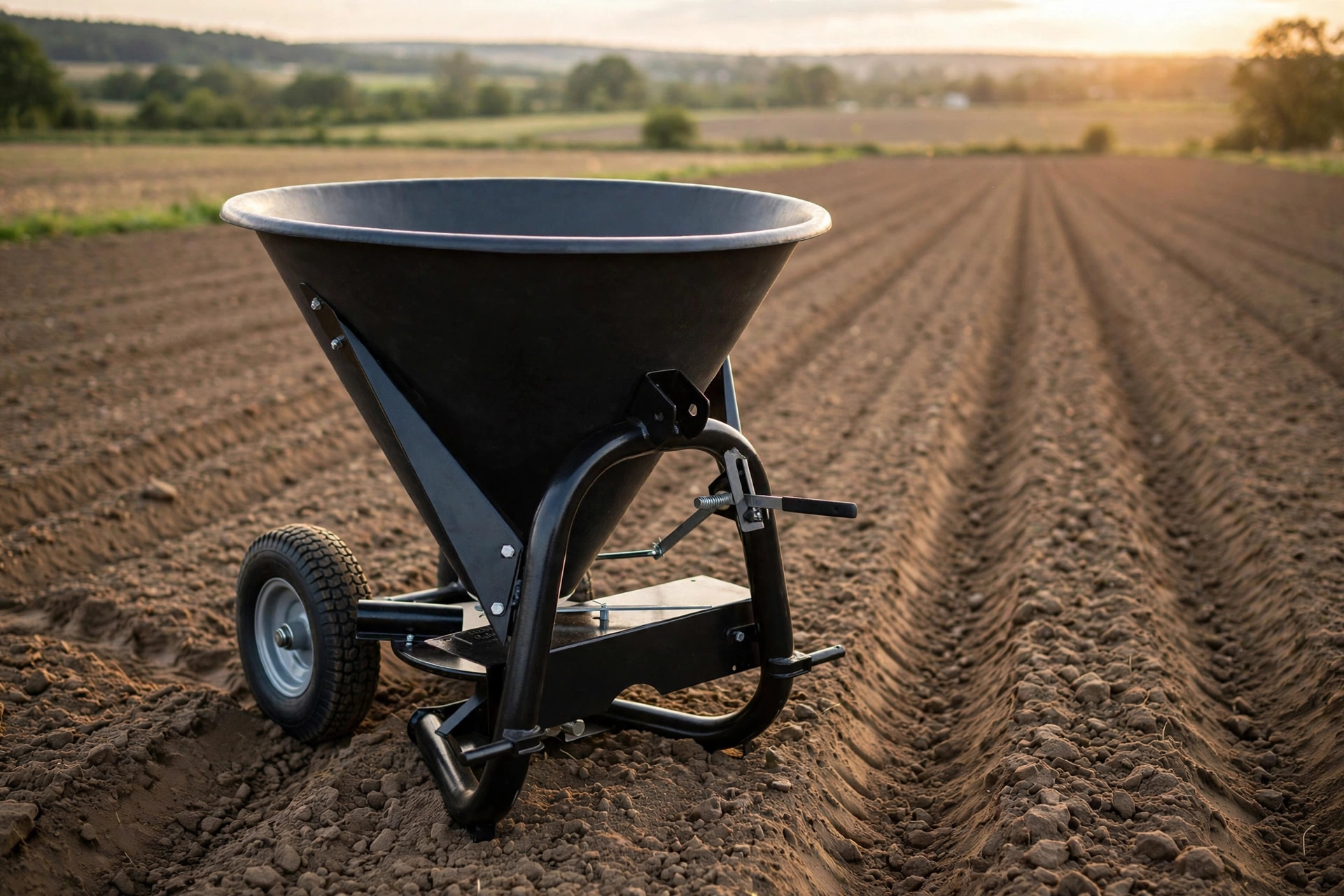
Here's the trick most tractor owners already own: a poly-hopper fertilizer spreader works just as well spreading salt and ice melt as it does spreading fertilizer in spring. Fill it, drive your walks and driveway, and the ice problem becomes a five-minute job. Just hose it out and dry it afterward — salt eats steel, and you don't want to learn that in spring.
 Save
Save4. Cordless snow tools for small driveways
No tractor? No problem — you don't need one for a short driveway, walkways, and steps.
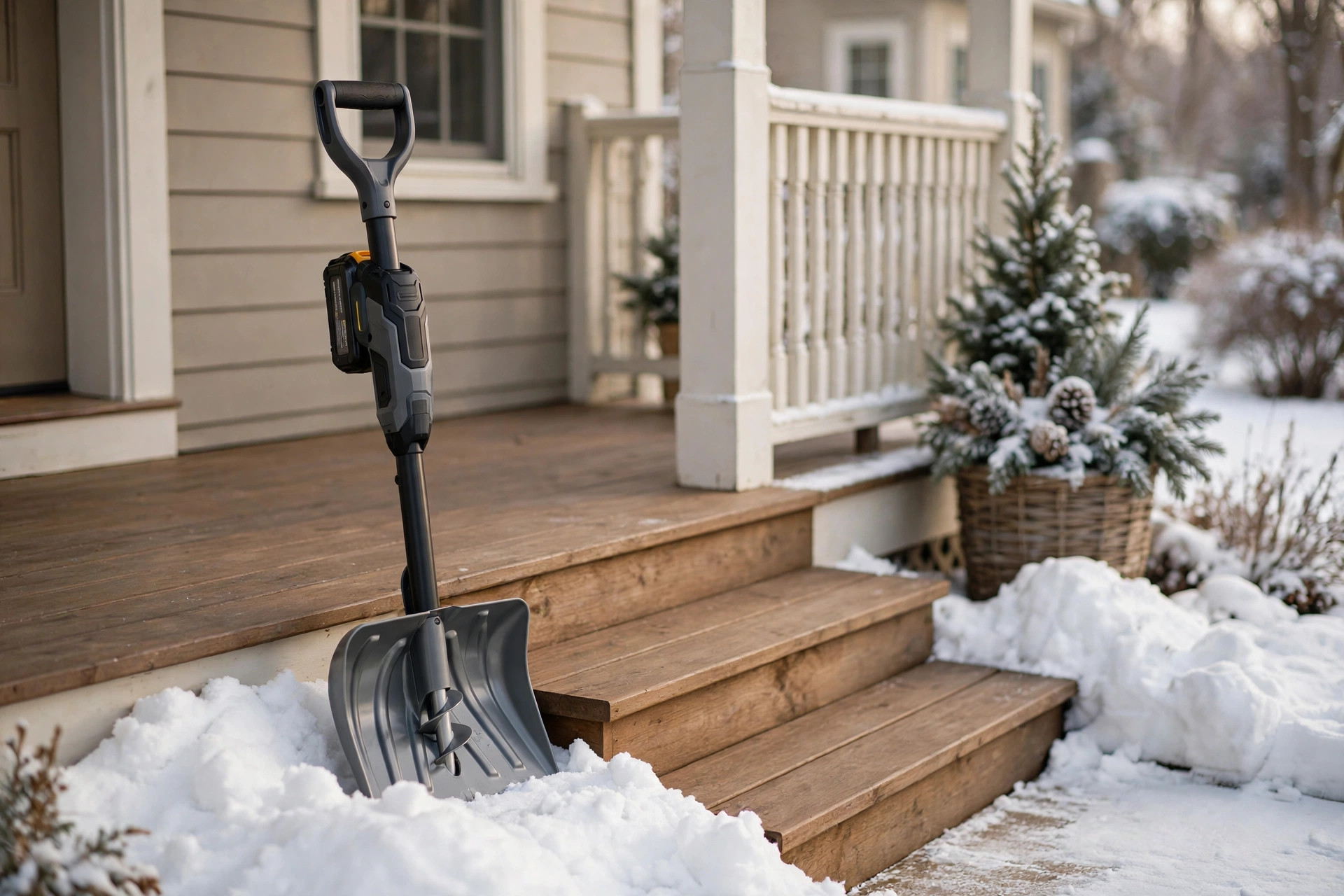
A cordless snow shovel (40V) is the sweet spot between a hand shovel and a full snow blower. It throws light-to-moderate snow fast, weighs almost nothing, and starts with a button. Keep it by the door for the quick clears — walkways, porch steps, the area around the mailbox — and save your back for the big storms.
The battery rule from our tool guides applies here too: if you already own cordless tools, stick to your battery platform. Sharing batteries across tools is half the value of going cordless.
 Save
Save5. You'll be working in the dark
Winter means short days. You'll be clearing snow before work and after dinner, and a driveway in the dark hides ice, curbs, and landscaping edges.
A rechargeable LED work light earns its keep all winter — clamp it to the tractor's ROPS, hang it in the garage while you service the blower, or set it by the walkway while you salt. It's one of those purchases you wonder how you lived without.
 Save
SaveWhat to skip
- Waiting until the first snowfall to order snow gear. October installs beat November backorders every single year.
- A blower your tractor can't power. Check your PTO horsepower rating against the implement's minimum before buying — the spec plate doesn't lie.
- Skipping the driveway grade. A perfect snow blower on a rutted, frozen driveway still makes a mess. Fix the surface in October.
- Ice melt on brand-new concrete. Give new concrete a full season to cure before hitting it with salt — it damages fresh concrete.
- The cheapest generic PTO shaft that "fits." Wrong length or missing shear protection on a snow blower shaft is how gearboxes die. Buy the shaft the implement maker specifies.
The bottom line
October checklist: pick your weapon (blower for deep snow and long drives, blade for light snow and short ones), grade the driveway with the scarifier shanks and drag harrow, stage the spreader with ice melt, and keep a cordless snow shovel by the door for the small stuff. Do it once, do it in daylight — and when the first real storm hits, you'll just be the person who was ready.